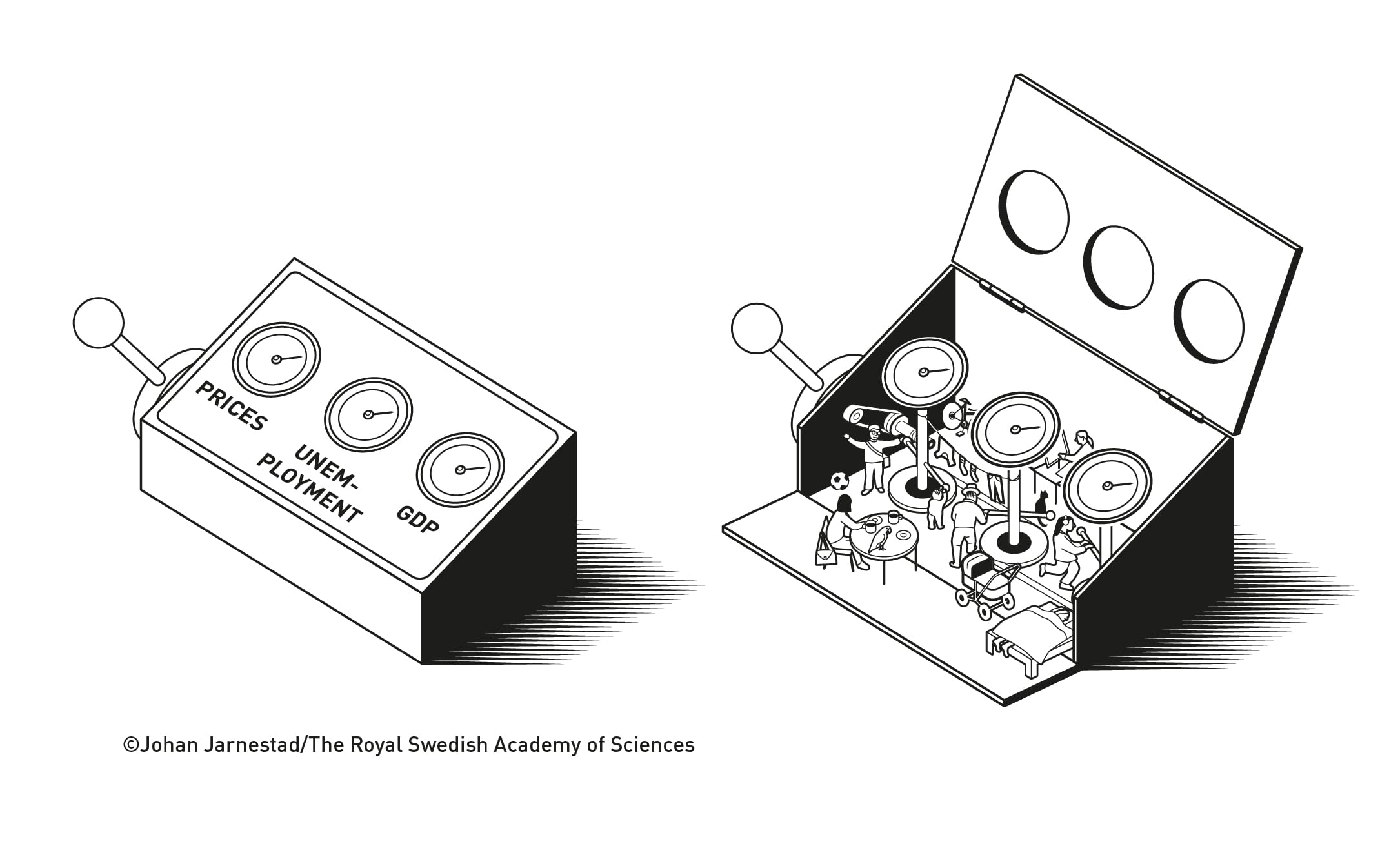
“New Keynesian models are based on microfoundations”, Figure 2 of the 2026 prize announcement. © Johan Jarnestad/The Royal Swedish Academy of Sciences.
On 12 October the 2026 prize in economic sciences went to Robert E. Hall of Stanford and Michael Woodford of Columbia “for microeconomic foundations of macroeconomic stabilisation”. Their work underpins the models central banks use to decide when to raise or cut interest rates. The Royal Swedish Academy of Sciences describes the approach in words that sound very familiar around this project: the models are built “from the bottom up. Economic outcomes are the result of millions of decisions made at the microlevel by households and businesses.”
The BAM model at the heart of BAM Engine comes from a book called Macroeconomics from the Bottom-up. So it is worth asking what the two traditions share and where they part ways.
Read more...